
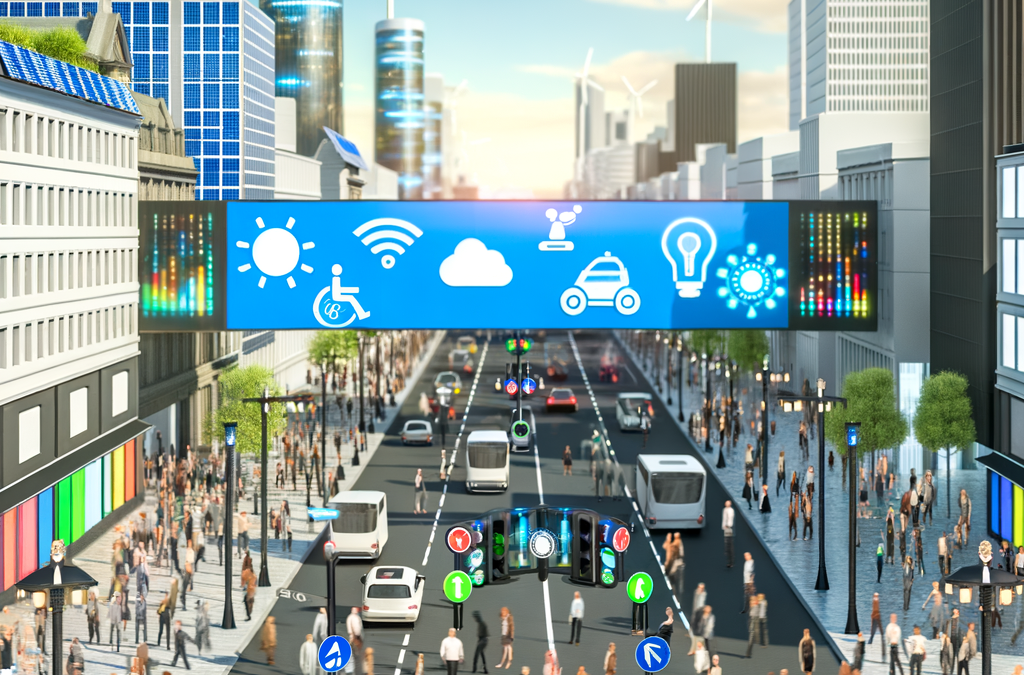
The transformation of cities into “Smart Cities” represents both a challenge and an opportunity in today’s world. Through the integration of technology, digitalization, and a focus on sustainable development, these cities aim to enhance the quality of life for their inhabitants. This article will explore how various factors such as mobility, energy, and governance are redefining contemporary urban areas.
The Evolution towards a Smart City: Innovation and Sustainability
Smart cities arise from the need to address current urban challenges through the efficient use of Information and Communication Technologies (ICT). In a world where connectivity and digitalization are key, these cities leverage data and advanced technologies to optimize resources and ensure sustainable urban development. The integration of renewable energies, such as solar and wind, promotes emission reduction, enhancing energy efficiency in urban environments. The use of Big Data has become an essential tool for urban planning, facilitating the understanding of mobility patterns, energy consumption, and cybersecurity, waste management, which in turn improves real-time decision-making.

Sustainable mobility is another fundamental pillar in the development of Smart Cities. Public transportation solutions, along with alternatives such as electric bikes and shared vehicles, not only contribute to a significant reduction in traffic and pollution but also enhance the quality of life. By utilizing mobile applications and intelligent traffic management systems, routes are optimized and travel time is reduced, increasing the city’s efficiency and competitiveness. All these systems rely on a robust technological infrastructure that ensures effective and transparent governance, promoting citizen participation.
Efficiency and Security in the 21st Century
One of the priorities in smart cities is the optimization of safety and efficiency through technological innovations. The implementation of intelligent surveillance systems and the adoption of cybersecurity measures are essential to protect both urban infrastructure and citizens’ information. By utilizing advanced technologies such as facial recognition and predictive analytics, it is possible to anticipate and prevent incidents, ensuring greater safety in public spaces.
On the other hand, effective waste management is essential for achieving environmental sustainability. By utilizing sensors and monitoring techniques, cities can optimize waste collection and recycling, thereby reducing environmental impact and promoting a circular economy. This approach not only minimizes negative effects on the environment but also enhances economic competitiveness by improving resource efficiency. Transparency in public service management, supported by digital platforms, allows citizens to actively participate in decision-making, increasing trust and administrative efficiency.

The adoption of technologies in Smart Cities presents a unique opportunity to redesign the urban environment towards a more sustainable and efficient future. With a focus on innovation, connectivity, and efficiency, smart cities not only promote a better quality of life but also strengthen the pillars of economic competitiveness and security.
How This Works in Practice
Implementing a smart city initiative requires a structured approach that involves several critical steps. First, a comprehensive assessment of the current urban landscape is necessary to identify specific challenges and opportunities. This assessment typically involves gathering data on traffic patterns, energy use, public services, and citizen feedback. Engaging with stakeholders—including local government, businesses, and community organizations—is essential to ensure that all voices are heard and that the initiative aligns with the community’s needs.
Once the assessment is completed, the next step is to create a strategic plan that outlines the vision and objectives of the smart city initiative. This plan should include a roadmap detailing the technologies to be deployed, the timeline for implementation, and the budget required. It is crucial to prioritize projects based on impact and feasibility, ensuring that resources are allocated effectively.
The development of a robust technological infrastructure is vital. This includes investing in high-speed internet connectivity, IoT devices, and data analytics platforms. Collaborations with technology providers can facilitate the integration of these systems. Following infrastructure development, pilot programs may be initiated to test specific technologies, such as smart traffic lights or waste management systems, allowing for adjustments before a city-wide rollout.
Engaging the community throughout the process is essential for fostering acceptance and participation. Public awareness campaigns and educational initiatives can inform citizens about the benefits of smart technologies. Finally, establishing metrics to evaluate the success of implemented solutions will help in refining strategies and ensuring continuous improvement.
What to Watch Out For
While the transition to a smart city offers numerous benefits, there are important limitations and trade-offs to consider. Chief among these is the potential for increased digital divide. Not all citizens may have equal access to technology or digital literacy, which can lead to disparities in participation and benefits. Ensuring equitable access is crucial to avoid exacerbating existing inequalities.
Another common pitfall is the over-reliance on technology without adequate consideration for human factors. While data-driven decision-making is essential, it should not replace the need for human judgment and community input. Additionally, privacy concerns can arise from the extensive use of surveillance and data collection technologies. Transparency about data usage and robust cybersecurity measures are crucial to maintain public trust.
Moreover, the integration of various systems can be complex and may lead to compatibility issues. Ensuring that new technologies can seamlessly work with existing infrastructure requires careful planning and potentially significant investment. Finally, without proper maintenance and updates, smart city technologies can become obsolete or ineffective over time, necessitating ongoing commitment and funding from local governments.
Frequently Asked Questions
Q: What are the initial steps to start a smart city initiative?
A: The initial steps include conducting a comprehensive assessment of urban challenges, engaging stakeholders, and developing a strategic plan that outlines objectives and necessary technologies.
Q: How can we ensure that all citizens benefit from smart city technologies?
A: It is crucial to prioritize equitable access by implementing programs that enhance digital literacy and providing resources to underserved communities to ensure inclusivity.
Q: What should be done to address privacy concerns related to data collection?
A: Transparency in data usage, clear communication about privacy policies, and robust cybersecurity measures are essential to protect citizens’ information and maintain trust.
Q: How can cities evaluate the success of their smart city initiatives?
A: Establishing metrics for evaluation, such as improvements in traffic flow, energy efficiency, and citizen satisfaction, allows cities to measure the effectiveness of implemented solutions and make necessary adjustments.