
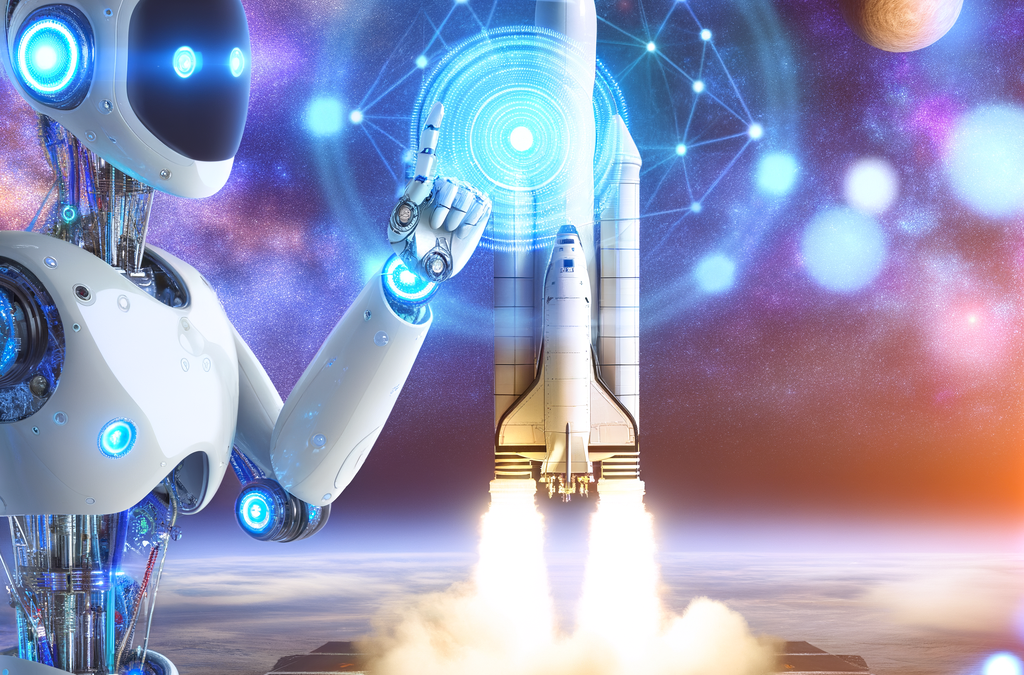
Artificial intelligence (AI) is revolutionizing space exploration, bringing together technologies such as machine learning and data analysis to transform space missions and astronomical research. Through collaboration between public agencies and private companies, AI is breaking down barriers and fostering innovation in space studies, while promoting inclusion and accessibility in education and technological development.
Revolution in Space Exploration Through AI
The impact of artificial intelligence in space exploration cannot be underestimated. AI, along with machine learning, is enabling the collection and analysis of large volumes of data, facilitating real-time decision-making during space missions. NASA, SpaceX, and the European Space Agency (ESA) are among the entities investing in these technologies to optimize their operations and encourage technological innovation.
Moreover, satellites now incorporate AI for tasks such as climate monitoring and weather forecasting, enhancing real-time accuracy and helping to mitigate the impact of climate change. Advancements in deep learning enable data processing on an unprecedented scale, increasing our understanding of the universe. Machine learning algorithms are not only being used for the analysis of astronomical data but also in the automation and control of spacecraft, reducing the margin of human error.
Private companies play a crucial role in this transformation. Thanks to public-private partnerships, resources and knowledge are shared more effectively, facilitating access to AI and fostering a constantly innovative environment. This not only accelerates progress in space research but also opens doors to new opportunities for entrepreneurs and scientists interested in space studies.
Inclusivity, Education, and the Digital Divide in the Space Age
The advancement of AI and space missions has highlighted the importance of inclusivity and education in STEM fields. Promoting educational access is essential for bridging the digital divide and ensuring diversity in space studies. Online courses and distance education programs are democratizing scientific and technological knowledge, allowing more individuals, regardless of their geographical location, to access accredited training at universities and academic fields.
Initiatives such as scholarships focused on STEM and the availability of courses in legal technology and legal studies are also equipping students with the necessary skills to tackle the ethical and legal challenges associated with AI and space exploration. Ethics in technological development and the establishment of appropriate legal frameworks are essential to ensure that the use of AI in space exploration is responsible and equitable.
The promotion of interdisciplinarity is key in this context. Collaboration among different disciplines not only enriches analysis and research in space but also strengthens the development of innovative solutions that address global issues. As access to the internet and technology continues to grow, the barriers to entering the study of AI and space keep diminishing, fostering a more inclusive and diverse future.
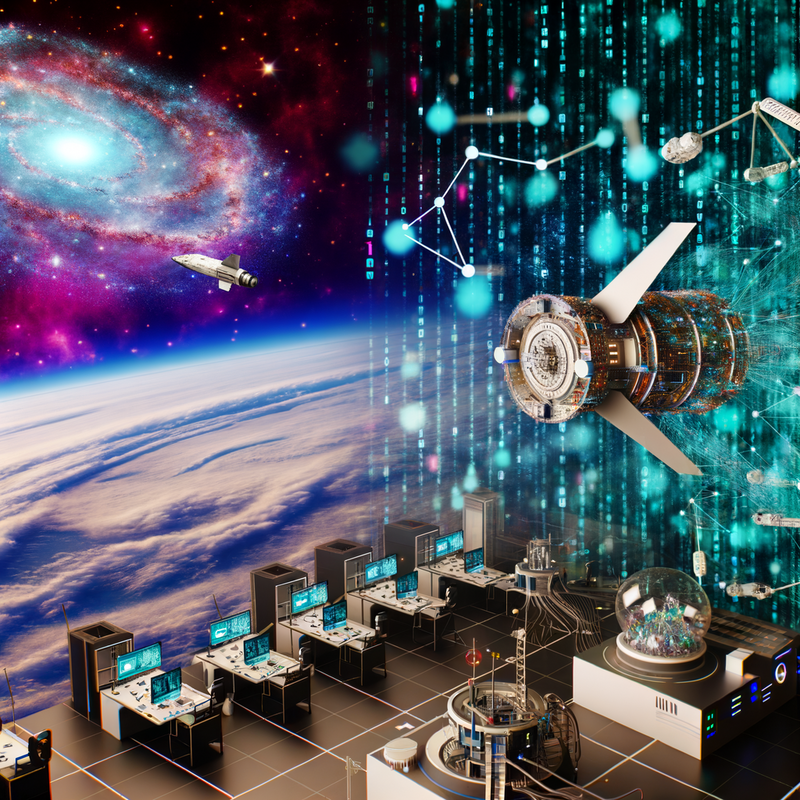
The future of space exploration and AI is defined by innovation and inclusivity. Global collaborations and educational initiatives promote continuous advancement, ensuring equitable and responsible access to these powerful technological tools. The potential of AI in space is immense, and over time, we will achieve a deeper understanding of the cosmos. Discover how AI is revolutionizing space. NASA and SpaceX are leading advancements. Accessible courses promote inclusion. Learn more about opportunities in STEM.
How This Works in Practice
Implementing AI in space exploration involves several key steps and requires collaboration among various stakeholders. The process typically begins with identifying specific objectives that AI can address, such as enhancing data analysis capabilities or improving mission planning.
First, organizations must establish a clear framework for the integration of AI technologies. This includes assessing existing data infrastructure and determining the types of AI algorithms that will be useful for the specific mission objectives. For instance, machine learning models may be developed to analyze satellite imagery or optimize spacecraft navigation.
Next, a cross-disciplinary team is assembled, comprising data scientists, engineers, and domain experts in space science. This team collaborates to develop, test, and refine AI models, ensuring that they are tailored to the unique challenges of space exploration. Collaboration with universities and research institutions can also be beneficial, as these entities often bring cutting-edge research and expertise.
Once the AI models are developed, they undergo rigorous validation and testing. This stage is critical, as it ensures that the AI systems can perform reliably in the harsh conditions of space. Simulations and controlled experiments may be conducted to evaluate performance before deployment.
After successful testing, the AI systems can be integrated into operational workflows. This involves training personnel to work with the new technologies and establishing protocols for data management and analysis. Continuous monitoring and feedback loops are essential to refine AI applications further and adapt them to evolving mission requirements.
In practice, this approach has seen AI being utilized in mission planning, spacecraft health monitoring, and autonomous navigation, significantly enhancing the efficiency and safety of space missions.
What to Watch Out For
While the integration of AI into space exploration offers numerous advantages, there are important limitations and trade-offs to consider. One of the primary concerns is the reliance on data quality. AI systems are only as good as the data they are trained on; if the data is incomplete or biased, the AI’s outputs may lead to flawed conclusions or decisions.
Another potential pitfall is the complexity of AI algorithms. While advanced models can provide insights, they may also be difficult to interpret. This lack of transparency can hinder decision-making, especially in critical situations where human oversight is necessary. It is essential to strike a balance between automation and human intuition.
Additionally, there is a risk of over-reliance on AI systems, which may lead to complacency among mission operators. Training and education remain crucial to ensure that personnel can effectively interpret AI outputs and intervene when necessary.
Moreover, the rapid pace of AI development can outstrip regulatory frameworks, creating ethical and legal dilemmas. As AI technologies evolve, organizations must remain vigilant and proactive in addressing these challenges to ensure responsible usage.
In summary, while AI can significantly enhance space exploration, it requires careful implementation and ongoing assessment to mitigate potential drawbacks and ensure ethical and effective use.
Frequently Asked Questions
Q: What are the primary benefits of using AI in space exploration?
A: The primary benefits include enhanced data analysis capabilities, improved real-time decision-making, increased mission efficiency, and reduced risk of human error in spacecraft operations.
Q: How can educational initiatives help bridge the digital divide in STEM fields?
A: Educational initiatives can provide access to accredited training and resources, enabling individuals from diverse backgrounds to acquire the skills needed for careers in STEM and participate in space exploration efforts.
Q: What are the main challenges associated with integrating AI into space missions?
A: Challenges include ensuring data quality, maintaining transparency in AI decision-making, preventing over-reliance on AI systems, and navigating ethical and regulatory issues related to AI usage.
Q: How do public-private partnerships enhance the development of AI technologies for space exploration?
A: Public-private partnerships facilitate the sharing of resources and expertise, enabling more effective research and development of AI technologies, which accelerates innovation and expands opportunities in space exploration.