
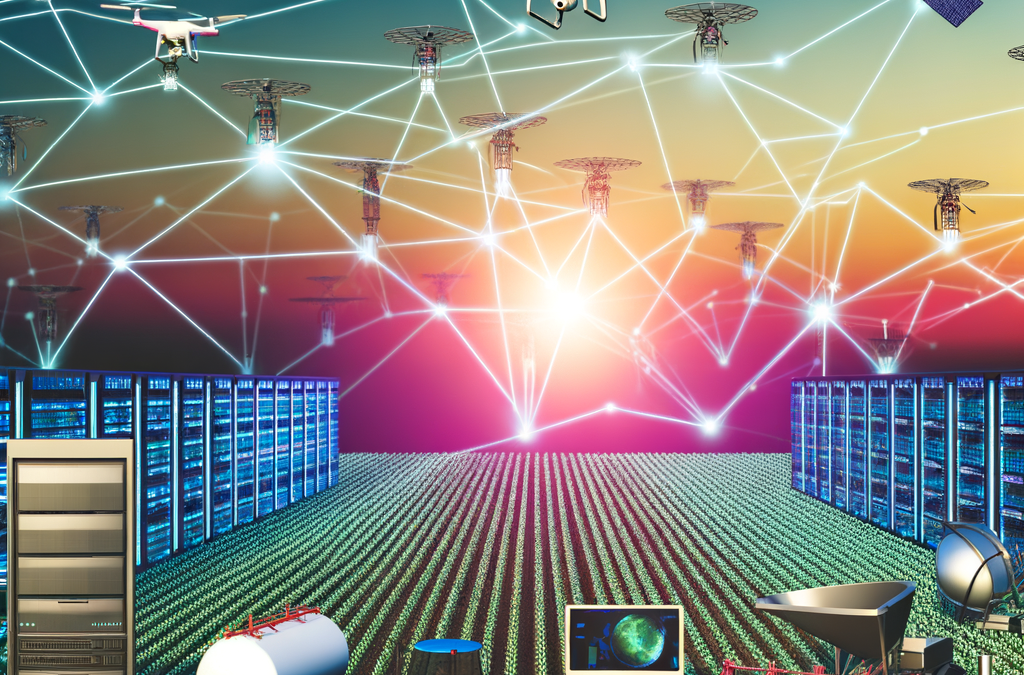
The revolution of Artificial Intelligence is transforming every sector of the modern world, and Modern Agriculture is no exception. Technologies such as Machine Learning, IoT, and Big Data are leading to the creation of a Smart Agriculture that promises to enhance agricultural efficiency, sustainability, and food security through technological innovations in farm management and agricultural production.
Smart Agriculture: Integration of Big Data and Machine Learning
Smart Agriculture is defined by its ability to integrate various advanced technologies to optimize agricultural production. This is where Big Data and Machine Learning play a crucial role. By collecting massive amounts of data on soil conditions, weather, and crop yields, AI can provide detailed analyses that help farmers make evidence-based decisions. This accumulation and processing of information enable the implementation of predictive analytics, facilitating the anticipation of potential problems and opportunities for improvement in production.

Predictive analytics is particularly effective when combined with Machine Learning technologies. Algorithms can identify patterns that are invisible to the human eye, allowing for real-time adjustments to agricultural practices. This, along with the use of drones for crop monitoring, represents a significant advancement towards precision agriculture that optimizes the use of natural resources and minimizes waste, while simultaneously maximizing crop yields.
Internet of Things and Automation in Farm Management
The Internet of Things (IoT) complements the digital transformation of the agricultural sector through the automation and connectivity of devices. IoT-enabled sensors can monitor a wide range of environmental factors in real time, including soil moisture, temperature, and plant health. This data, when linked with Precision Agriculture systems, allows for the automation of tasks such as irrigation and fertilization, adjusting actions based on the specific needs of each crop area.
Automation not only translates to time and cost savings but also enhances agricultural efficiency by reducing the margin of human error. Powered by Machine Learning, these systems can learn and adapt to changing conditions, continuously improving their predictive models to provide increasingly accurate recommendations. As a result, farmers can manage their operations more efficiently and sustainably, significantly contributing to global food security by increasing food supply with a lower environmental impact.

The use of advanced technologies such as AI, IoT, and Machine Learning is revolutionizing agriculture towards a more efficient and sustainable model. By integrating Big Data and predictive analytics, these innovations enhance resource management, production, and sustainability in agriculture, ensuring a safer and more abundant future.
How This Works in Practice
Implementing Smart Agriculture involves a systematic approach that integrates technology with traditional farming practices. The following steps outline a typical sequence:
- Assessment of Needs: Farmers must first evaluate their specific agricultural challenges, such as crop yield variability, pest management, or inefficient resource use. This assessment helps to identify which technologies will be most beneficial.
- Data Infrastructure Setup: Establishing a robust data infrastructure is crucial. This includes installing IoT sensors in fields to collect real-time data on soil conditions, weather patterns, and crop health. Connectivity options, such as Wi-Fi or cellular networks, should be established to ensure data transmission.
- Data Collection: Once the infrastructure is in place, data collection begins. IoT devices gather data continuously, providing a comprehensive view of operational conditions. This data is often stored in cloud-based systems for easy access and processing.
- Data Analysis: Utilizing Machine Learning algorithms, the collected data is analyzed to uncover patterns and insights. This may involve employing predictive analytics to forecast crop performance or identify potential issues before they escalate.
- Decision-Making: Based on the insights gained from data analysis, farmers can make informed decisions about irrigation schedules, fertilization, pest control, and harvesting times. This evidence-based approach enhances operational efficiency and crop productivity.
- Implementation of Automation: Following decision-making, farmers can implement automated systems for tasks such as irrigation and fertilization. These systems adjust operations in real-time, responding to changing environmental conditions and crop needs.
- Monitoring and Feedback: Continuous monitoring of the agricultural environment is essential. Farmers should regularly review system performance and crop outcomes, using this feedback to refine data collection and analysis processes, improving future decision-making.
Collaboration among various stakeholders, including technology providers, agronomists, and farmers, is essential throughout this process to ensure that the technologies are effectively integrated and tailored to specific agricultural contexts.
What to Watch Out For
While Smart Agriculture offers significant advantages, there are limitations and potential pitfalls that decision-makers should consider:
- Data Overload: The sheer volume of data generated can be overwhelming. Without proper data management strategies, farmers may struggle to extract actionable insights, leading to analysis paralysis.
- High Initial Investment: Implementing advanced technologies often requires substantial upfront investments in equipment, software, and infrastructure. Farmers should carefully assess their financial capabilities and consider long-term returns on investment.
- Dependence on Technology: Increased reliance on automated systems can lead to reduced hands-on management skills among farmers. This dependency may become problematic if technology fails or if there are connectivity issues.
- Privacy and Security Concerns: The collection and storage of sensitive agricultural data raise privacy and cybersecurity concerns. Farmers must ensure that they implement robust security measures to protect their data from breaches.
- Not a One-Size-Fits-All Solution: Different crops and farming practices may require tailored approaches. What works for one farm may not be suitable for another, necessitating careful customization of technologies to fit specific needs.
- Training and Skill Development: The successful implementation of Smart Agriculture requires skilled personnel who understand both the technology and agricultural practices. Investment in training is crucial to ensure that farmers can effectively utilize these technologies.
Being aware of these challenges can help farmers mitigate risks and make informed decisions when integrating Smart Agriculture technologies into their operations.
Frequently Asked Questions
Q: What kind of data is most valuable for Smart Agriculture?
A: Valuable data includes soil moisture levels, temperature, humidity, crop health indicators, and weather forecasts. This information helps farmers make informed decisions about irrigation, fertilization, and pest control.
Q: How can farmers ensure the security of their data?
A: Farmers can enhance data security by using encryption, implementing strong password protocols, and regularly updating software. Additionally, utilizing secure cloud services with robust security measures can protect data from breaches.
Q: Is Smart Agriculture suitable for all types of farms?
A: While Smart Agriculture can benefit many farms, its suitability depends on the specific context, including crop types, farm size, and available resources. Each farm must assess its unique circumstances before adopting these technologies.
Q: What role do partnerships play in implementing Smart Agriculture?
A: Partnerships with technology providers, agronomists, and research institutions are crucial for successful implementation. These collaborations can provide farmers with access to expertise, resources, and tailored solutions that enhance their agricultural practices.